Why Safety Training Fails. AND WHAT TO DO ABOUT IT
A practical guide to multi-modal learning in high-hazard industry.
Published By
XR2TRAIN | IkigaiXR Group · 2025
IOSH Approved · CITB Endorsed · Deployed at Hinkley Point C

The Problem Is Not What You Think. Retention, Relevance, and Culture
Most organisations believe they have a training problem. They do not. What they actually have is a retention problem, a relevance problem, and — in many cases — a culture problem. And traditional safety training, however well-intentioned, has been quietly making all three worse.
This document is not a sales brochure. It is an honest account of why safety training has underperformed in high-hazard industry for decades, what the science tells us about how people actually learn under pressure, and how a fundamentally different approach — one that combines real human instruction, immersive technology, and intelligent support — can change outcomes that actually matter.
XR2TRAIN is a workforce safety intelligence platform built for the industries where getting it wrong means someone does not go home. Nuclear. Offshore oil and gas. Defence. Pharmaceuticals. Renewables. We know these environments because we have worked in them — collectively, for decades. What we have built comes from that experience, not from a product roadmap.
“Built for the front line. Not the classroom.”
The platform is IOSH Approved and CITB Endorsed. It is live at Hinkley Point C — Europe's largest infrastructure project — deployed through Bylor, the Laing O'Rourke and Bouygues TP joint venture. It is deployed at Sellafield. These are not pilot studies. This is operational reality in two of the most safety-critical environments in the UK.
Part One: The Core Problem. What We Know About Learning

Think about the last time you truly learned something. Not memorised it for a test. Actually learned it — so that when a situation arose six months later, the right response was just there, ready.
Chances are it involved doing, not just watching or reading. It involved some element of consequence. And it probably involved repetition — not the boring kind, but the kind where you encountered the same challenge in slightly different forms until your brain simply encoded it.
This is not a philosophical observation. It is neuroscience. The human brain does not store information like a hard drive. It builds patterns through experience, reinforces them through repetition, and encodes them most deeply when emotion and physical sensation are involved.
Traditional safety training asks the brain to recall a slide deck at the moment it most needs to recall an experience.
The amygdala — the part of the brain responsible for our instinctive responses in high-stress situations — draws on memory formed through real experience. When something genuinely dangerous happens, the brain asks: have I been here before? If the answer is yes, it responds appropriately. If the answer is no, the response is slower, less reliable, and potentially catastrophic.
The Memory Gap. The Retention Problem

This is the fundamental design flaw in conventional safety training. A classroom session, however well delivered, primarily creates declarative memory — you know that you should follow a procedure. What it rarely creates is procedural memory — you know how to follow it, instinctively, under pressure, when everything is going wrong around you.
The gap between knowing and doing is where incidents happen.
The Retention Problem
Research consistently shows that without reinforcement, learners forget the majority of what they are taught within days of a training session. This is not a reflection of intelligence or effort. It is simply how human memory works. The brain deprioritises information it has not needed to use. If a safety procedure learned in a classroom is never rehearsed in a realistic context, it fades.
In most industries, the solution has been to run the same training again the following year. This is the equivalent of trying to fill a leaking bucket by pouring more water in faster. It addresses the symptom, not the cause.
One Size Fits None. The Culture Problem
The Relevance Problem
Walk onto any major construction or industrial site and speak to the workers. Ask them what they thought of their induction. You will hear a recognisable set of responses: too long, too generic, too much reading, not enough relevance to what they actually do. A scaffolder sitting through a module written for a chemical process operator. A radiographer completing generic manual handling content that bears no resemblance to the specific loads and environments they work in.
One-size-fits-all training communicates something unintentional to the workforce: we have not really thought about you specifically. And when workers feel training has not been designed for them, they disengage.
The Culture Problem
This one is harder to talk about, but it is the most important. Safety culture is not a poster on a wall or a set of KPIs. It is what people do when nobody is watching. It is whether a worker feels able to raise a concern without being seen as a troublemaker. It is whether near-misses get reported or quietly buried.
Training that feels like a compliance exercise creates compliance behaviour. Training that genuinely engages, challenges, and respects the intelligence of the workforce creates people who have internalised the reasons behind the rules, not just the rules themselves.
Part Two: How People Actually Learn. Stress Inoculation

There is a concept in psychology called stress inoculation. The principle is straightforward: controlled, realistic exposure to a stressful scenario reduces the novelty of that scenario when it occurs in real life. A less novel threat produces a faster, more measured response. This is why soldiers rehearse under simulated fire, why surgeons practice on simulators before operating on patients, and why pilots spend hundreds of hours in flight simulators before they carry passengers.
High-hazard industry has been slower to adopt this principle than it should have been. The reasons are understandable — realistic simulation is expensive, logistically complex, and requires specialist expertise to design and deliver. But the calculus has shifted.
Extended Reality technology — virtual and augmented environments that can replicate industrial settings with high fidelity — has made stress inoculation accessible at scale for the first time.
The question is no longer whether we can give workers realistic experience before they need it. The question is why we are still choosing not to.
Effective Learning. What the Brain Needs
Effective learning — the kind that sticks and translates to behaviour under pressure — requires several conditions to be present simultaneously:
The brain pays attention to things it has to respond to, not things it passively receives. A learner who makes decisions and corrects errors encodes information far more deeply.
Memory is strengthened by emotional context. Scenarios that create a genuine sense of consequence are remembered more vividly and for longer than abstract information.
A single exposure produces limited retention. The brain needs to encounter the same concepts and procedures repeatedly, in varied contexts, over time.
Workers learn best when they feel safe to make mistakes. An environment where errors are punished produces people who hide errors rather than learn from them.
Creating genuine psychological safety in training is not a soft concern — it is a prerequisite for effective knowledge transfer.
Industrial Resilience. Maslow in Hard Hats
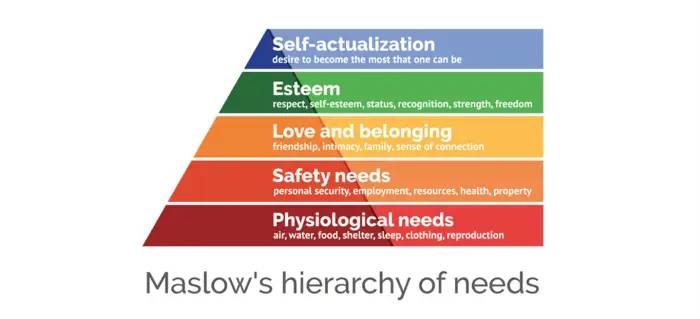
Abraham Maslow's hierarchy of needs was not developed for safety training. But it maps onto it with uncomfortable accuracy. A worker who does not feel physically safe cannot engage meaningfully with higher-level learning. A worker who does not feel part of a team, or whose contribution is not respected, will not develop the safety leadership behaviours that create resilient site cultures.
A worker who is given genuine development opportunities — who feels that their growth matters to the organisation — will engage with safety not as a burden but as part of their professional identity.
THE CONCLUSION OF PART TWO:
The best safety training programmes do not just transfer information. They build people. And organisations that invest in building people get something back that compliance-based training can never produce: a workforce that holds itself to a high standard because it wants to, not because it has been told to.
Part Three: The Framework. Why One Method Is Never Enough
The XR2TRAIN platform is built around four interconnected learning modalities. Not because more is automatically better, but because different types of knowledge require different methods to be acquired and retained effectively. The framework is not a menu — it is a system. Each component plays a specific role, and the value emerges from their integration.
Modality 01: Face-to-Face Instruction
There are things a skilled instructor can do that no technology can replicate. Reading a room. Sensing when a concept has not landed. Responding to the specific questions of a specific workforce in a specific hazardous environment. Holding space for the kind of honest conversation that only happens when people feel they are being spoken to by someone who genuinely knows what they are talking about.
Face-to-face instruction remains the foundation of the XR2TRAIN approach. It is where context is established, where trust is built, and where the human element of safety culture is most directly addressed. The technology exists to extend and reinforce it — not replace it.
Digital Evidence. Procedural Memory through XR
Modality 02: E-Learning
Well-designed e-learning gives workers access to consistent information on their own terms. It creates a documented evidence trail of competency that satisfies regulatory requirements. Done well — with genuine interactivity and adaptive content — it is a genuinely effective component of a broader learning system. The platform includes IOSH Approved and CITB Endorsed content, built to the standards that regulated industries require.
Modality 03: Extended Reality (XR and VR)
This is where the science of stress inoculation becomes practical. Virtual environments allow workers to encounter realistic high-hazard scenarios — confined space entry, working at height, emergency evacuations — without any of the actual risk. They can make mistakes, understand consequences, and rehearse correct responses.
The immersive quality of XR is the mechanism by which declarative knowledge becomes procedural memory. A worker who has experienced a simulated gas alarm is genuinely better prepared than one who has read about it.

Predictive Intelligence. The Golden Thread
Modality 04: AI-Assisted Learning Support
Artificial intelligence embedded in the platform personalises learning pathways based on how an individual is performing. It identifies knowledge gaps before they become safety gaps and provides on-demand support. This is how modern learning systems work when designed intelligently: deploying technology in service of genuine safety outcomes, not just impressive dashboards.
The Golden Thread
The four modalities are transformative when they are connected. At XR2TRAIN we use the term “golden thread” to describe the coherent, continuous learning experience that links classroom instruction to e-learning to XR simulation to AI support — all oriented around the same learning objectives, the same hazard environment, and the same workforce.
This coherence is what separates a training programme from a training system. And it is the system that changes behaviour. Nothing is disconnected. Everything is intentional.
Part Four: Implementation. Making It Work on the Ground
A framework is only as good as its implementation. And implementation in high-hazard industry is not a desk exercise. It involves working environments that are loud, physically demanding, and operationally pressured. Workers who are time-poor, sometimes sceptical, and carrying the accumulated experience of years on site. Project timelines that do not flex to accommodate training schedules.
We know this because we have navigated it ourselves — on nuclear sites, on offshore platforms, on major infrastructure projects. What follows is an honest account of how effective implementation works in practice.
Phase One: Understanding Before Prescribing
Every deployment begins with a proper assessment of where the workforce actually is — not where a training needs analysis spreadsheet suggests they should be. What does the site's incident and near-miss data tell us? Where are the genuine knowledge gaps versus the compliance gaps? What does the existing training provision look like, and what is it actually achieving?
This phase is not billable theatre. It is the difference between a training programme that addresses the actual risk profile of the organisation and one that addresses a generic version of it.

Operational Reality. Respecting the Front Line
Phase Two: Deployment That Respects Operational Reality
Good training does not interrupt operations — it integrates with them. Modular content that workers can access in 15-minute windows between shifts. XR scenarios that can be delivered in a converted welfare unit on site. AI support that is available on the device already in the worker's pocket. The platform is designed to meet the workforce where they are, not to require the workforce to reorganise around the platform.
The most technically excellent training system will fail if site supervisors are not briefed, if workers feel it is being imposed on them, or if there is no visible leadership commitment from the top of the project organisation. Getting this right requires attention to the human factors of deployment, not just the technical ones.
Success requires a shared understanding that modern tools are there to empower the worker's professional identity, not just to tick a regulatory box in a distant office.
Evidence of Competency. Metrics That Matter

Phase Three: Measurement That Means Something
The metrics that matter in safety training are not completion rates. Completion rates measure compliance, not competency. The XR2TRAIN platform is built to generate longitudinal evidence.
Knowledge retention at 30, 60, and 90 days post-training.
Hard data before and after deployment on site.
Self-reported confidence in safety-critical procedures.
Observable changes in safety behaviour on site.
In high-hazard industry, not knowing whether your training is working is not a neutral position. It is a risk.
Part Five: Standards and Compliance. ISO 45001 Competence Requirements
ISO 45001 is the international standard for occupational health and safety management systems. Most organisations in high-hazard industry are familiar with it. Fewer have genuinely embedded its principles into their training approach, as opposed to their management system documentation.
Evidence vs. Attendance:
The standard requires demonstrable workforce competence — not just evidence that training occurred, but evidence that it produced competent people. This distinction matters enormously in a post-incident investigation.
A completion certificate proves someone sat through a course. A competency assessment, supported by a documented learning system with longitudinal data, proves something considerably more useful. The XR2TRAIN infrastructure is designed to bridge this specific gap between regulatory paper trails and operational reality.
ISO 45003. Psychological Health as Operational Risk
The Psychological Dimension: ISO 45003
ISO 45003 extends the framework to psychological health and safety — an area that has historically been underweighted in industrial training despite its direct relationship to safety outcomes. A workforce under significant psychological pressure makes more errors. Fatigue, stress, and poor team dynamics are contributing factors in a substantial proportion of workplace incidents.
These are not soft issues. They are operational risks.
The XR2TRAIN platform incorporates psychological safety principles throughout its design — in how learning environments are constructed, in how errors are treated, and in the tone of all content. A worker who feels heard and supported is a safety asset; one who feels unsafe raising a concern is a liability.
Part Six: In Practice. Hinkley Point C & Bylor Deployment
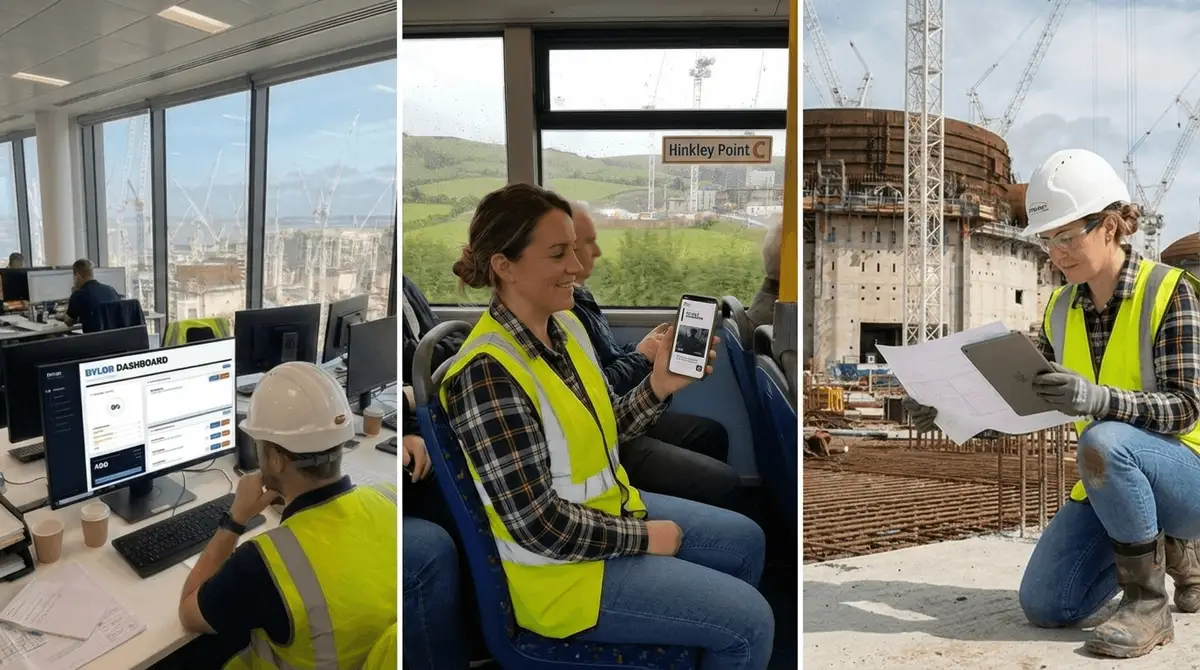
Hinkley Point C is the most complex nuclear construction project in a generation. The Bylor joint venture — Laing O'Rourke and Bouygues TP — is responsible for the civil construction programme, managing a workforce operating in one of the most safety-critical environments in the UK. The margin for error is effectively zero.
Operational Status:
XR2TRAIN is deployed with Bylor at Hinkley Point C. This is not a trial, a pilot, or a proof of concept. It is operational deployment in a live nuclear construction environment.
The deployment meets the competency standards required by the Office for Nuclear Regulation (ONR) and the rigorous internal requirements of two of the most safety-conscious major contractors in the industry. The platform was selected because it met a genuinely high bar — technically, pedagogically, and in terms of the credibility of the team behind it.
Built, Evidenced, Maintained. The Nuclear Benchmark
“Competency cannot be assumed. It must be built, evidenced, and continuously maintained. That is what XR2TRAIN is designed to do.”
In environments like Hinkley Point C and Sellafield, the transition from ‘training events’ to ‘competency systems’ is not optional. It is a prerequisite for safety-critical operations. The platform provides the longitudinal data required to satisfy regulatory oversight while empowering the workforce to manage their own professional safety identity.
Conclusion. A Different Way of Thinking
Safety training in high-hazard industry has been running on an outdated model for too long. The model assumes that information transfer equals competency. It does not. It assumes that annual recertification equals a safe workforce. It does not.
The approach described in this document is different. It starts from how people actually learn — under pressure, through experience, with repetition and reinforcement over time. It uses technology not as a novelty but as a genuine mechanism for creating the kind of procedural memory that saves lives.
It treats the workforce as intelligent adults who deserve training that has been genuinely thought through for their specific environment and role. It generates the evidence that allows organisations to know, honestly and specifically, whether their training is working.

Workforce Safety Intelligence. Join the Conversation
If you are responsible for workforce safety in a high-hazard environment — as a Project Director, an H&S Manager, or someone in procurement who understands that the cheapest training is rarely the least expensive — we would welcome a conversation.
Technical Sign-off
XR2TRAIN | Part of the IkigaiXR Group
Manchester · Mallorca · Dubai
xr2train.com
Registry Badges:
IOSH Approved · CITB Endorsed · Deployed at Sellafield