Why the Danger Is Never Where You Think It Is. CONFINED SPACES
Rethinking confined space training for high-hazard industry.
Published By
XR2TRAIN | IkigaiXR Group · 2025
IOSH Approved · CITB Endorsed · Deployed at Hinkley Point C
The Space Is Not the Hazard. The Assumptions Are
Every year, workers die in confined spaces in the United Kingdom. Not in obscure or unusual circumstances. In drains, tanks, vessels, and voids that are routine features of the environments that high-hazard industries operate in every single day. And in an uncomfortably high proportion of those fatalities, a second person — often the would-be rescuer — dies alongside the first.
This is not a problem of workers being reckless. It is a problem of training that produces people who know the rules of confined space entry but have never genuinely experienced what those rules are protecting them from. There is a profound difference between knowing that an oxygen-deficient atmosphere is lethal and having your body understand it — viscerally, procedurally, instinctively — through realistic exposure in a safe environment.
“In a confined space, the margin between a routine entry and a fatality can be measured in seconds. Training that does not prepare the body as well as the mind is not sufficient.”
XR2TRAIN delivers confined space training as part of a multi-modal safety learning system deployed in some of the most demanding industrial environments in the UK, including Hinkley Point C and Sellafield. What follows is the evidence and reasoning behind that approach.
What a Confined Space Actually Is. And Why That Matters
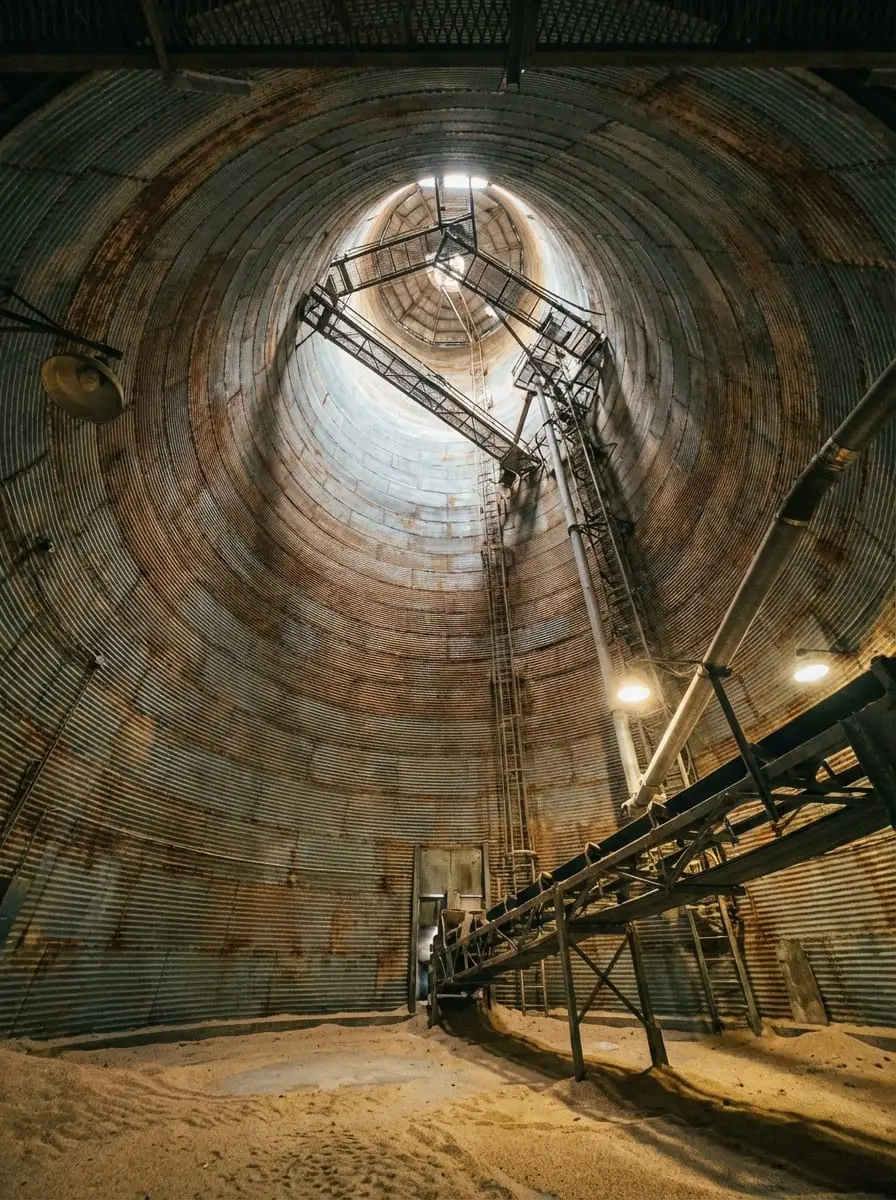
The Confined Spaces Regulations 1997 define a confined space as any place that is substantially enclosed, where there is a reasonably foreseeable specified risk. The definition is deliberately broad, because confined spaces come in an enormous variety of forms. A sewer. A storage tank. A ship's hold. A grain silo. A culvert. A ceiling void. A pressure vessel. A trench, under certain conditions. A room with insufficient ventilation.
What unites all of these environments is not their shape or size. It is the combination of limited access, restricted airflow, and the potential for atmospheric conditions to change in ways that are invisible, odourless, and by the time they are perceived, already incapacitating.
The most dangerous confined spaces do not announce themselves. They look and feel entirely normal — until they do not.
The Atmosphere Problem. Would-be Rescuer Syndrome
The Atmosphere Problem
The human body has no reliable mechanism for detecting oxygen deficiency. We do not feel short of breath when oxygen levels fall — the respiratory system responds to carbon dioxide build-up, not oxygen depletion. A person entering an atmosphere containing fifteen percent oxygen instead of the normal twenty-one percent will feel completely fine, then lightheaded, then lose consciousness. The entire sequence takes less than a minute.
The Access Problem
Confined spaces are difficult to enter and exit. A worker who becomes incapacitated inside a vessel through a 450mm access hatch presents a rescue challenge of an entirely different order. The second fatality — the rescuer who enters without preparation — is so common it is named 'would-be rescuer syndrome.' It is an almost instinctive human response to see a colleague collapse and go in after them. In a toxic atmosphere, it is a death sentence.
The most dangerous moment in a confined space incident is often not the original entry. It is the thirty seconds after someone realises something has gone wrong.
The Complacency Problem. Why Conventional Training Falls Short
Complacency is the most difficult factor to address through conventional training. The vessel that has been entered safely forty times. The drain that has never caused a problem. Complacency is not laziness; it is a rational response to repeated safe experience. The brain assigns a low threat level to entering a space that has always been safe before.
The Gap Between Knowing and Doing
The UK regulatory framework is well-developed. And yet incidents continue to happen. Not because the regulations are inadequate, but because the training has created compliance without creating genuine competency. Workers know the rules; they do not always know, in their muscles and their instincts, how to apply them under pressure.
Addressing complacency requires creating experiences — even simulated ones — that genuinely update the brain's threat assessment.
The Limitations of Classroom Instruction. The Tick-Box Problem
A classroom session can convey accurate information: definitions, risk categories, permit processes. But all of it will fade within weeks if it is not reinforced through realistic practice. Classroom instruction cannot create the physical responses emergencies demand: the ability to operate breathing apparatus correctly under stress or the muscle memory to execute an emergency evacuation through a restricted access point.
The Problem With Tick-Box Training
The pressure to demonstrate compliance has created conditions that work against genuine safety. If the measure of success is whether a worker holds a certificate, the incentive is to ensure they pass the assessment — not necessarily to ensure they are prepared for the environments they will encounter.
A worker who passed a course eighteen months ago and hasn't entered a confined space since is not the same as a worker who regularly practices the full entry procedure and has experienced realistic emergency scenarios.
Part Three: The Science of Effective Training. Stress Inoculation
Military and emergency services use stress inoculation: deliberate, controlled exposure to realistic high-stress scenarios so that when they occur in real life, they are not novel. The brain has been there before. Responses have been rehearsed. Critical decision points have been navigated in simulation often enough that the correct action is available without being consciously constructed from first principles under extreme pressure.
The brain does not fully distinguish between a well-constructed simulation and a real experience when it comes to the procedural memory it creates. That is precisely the point.
High-fidelity extended reality (XR) makes it possible to place a worker inside a photorealistic representation of a specific vessel, tunnel, or tank — with accurate equipment and dynamic hazard scenarios — at a fraction of the cost of building physical facilities.
Procedural Memory. The Role of Repetition
There are two kinds of memory relevant to safety. Declarative memory is knowing that you should carry out atmospheric monitoring. Procedural memory is the sequence of actions being so deeply encoded that you execute them correctly even when you are tired, distracted, or under pressure.
A worker who has carried out the permit-to-work process in training twenty times will execute it more reliably than a worker who has read about it twice.
The training challenge is creating the conditions for that repetition safely and at scale. XR removes the logistical barriers to high-frequency practice.
This is how the brain works. The only way to move knowledge into long-term behavioral change is through the repetition of realistic experience.
Atmospheric Monitoring. Decision-Making Under Pressure
The Skill Nobody Practices Enough
Atmospheric monitoring is the single most important technical competency, yet it is often reduced to a theoretical exercise. Workers are shown how a multi-gas detector works, but are expected to interpret readings reliably in real environments — sometimes under commercial pressure. Extended reality allows workers to monitor simulated spaces where readings reflect realistic, varied conditions that develop unexpectedly mid-entry.
Decision-Making Under Pressure
The most important decisions happen in seconds. Do I continue or withdraw? Training that prepares people for these points does not lecture them; it places them repeatedly in situations where they have to make the decision — and then experience the consequences of getting it wrong, in a safe environment where the consequence is a debrief rather than a fatality.
Part Four: The XR2TRAIN Approach. Foundations at Scale
The XR2TRAIN approach is built on the principle that different types of knowledge require different methods. No single training modality is sufficient; value emerges from their integration.
Foundation: Instructor-Led Training
The foundation is a skilled instructor with operational experience from nuclear, offshore, and major construction. They bring trust and context, addressing specific hazard profiles that generic sessions miss. It is the difference between training delivered by someone who knows the subject and someone who has lived it.
E-Learning: Consistent Foundations at Scale
The foundational knowledge of regulations, risk categories, and monitoring requirements is delivered through well-designed e-learning. This creates a consistent knowledge baseline across a workforce, documented and auditable, that can be completed flexibly.
Extended Reality. AI-Assisted Learning Support
Extended Reality: Where Competency Is Built
Workers are placed inside photorealistic representations of vessels, tunnels, and tanks. They carry out full pre-entry procedures. Then something changes. Atmospheric readings shift. A colleague shows signs of incapacitation. The worker must respond. The decisions have to be made in real time. This is the mechanism by which declarative knowledge becomes procedural competency.
AI-Assisted Learning Support
Artificial intelligence monitors individual performance across all modalities, identifies skill gaps, and adjusts the learning pathway. It provides on-demand support and reinforcement outside formal training sessions — critical for confined space work where the gap between entry events can be months.
Part Five: Regulation and Competency. The Evidence of Competency
The Confined Spaces Regulations 1997 define competence not as holding a certificate, but as having the knowledge, experience, and ability to carry out the work safely. This distinction matters enormously in a post-incident investigation. The specificity requirement of HSE Approved Code of Practice L101 is one that conventional programmes frequently fail to meet.
Building the Evidence of Competency
XR2TRAIN generates a granular evidence trail: performance data across all modalities, longitudinal records of skill development, and documented assessment against specific tasks. This demonstrates genuine competency, not just compliance with a schedule.
High-Hazard Deployment. Conclusion
XR2TRAIN is deployed at Europe's largest active infrastructure project, Hinkley Point C, through Bylor, and at Sellafield under Office for Nuclear Regulation standards. These are not pilot studies; they are operational programmes where the margin for error is zero.
“In a nuclear environment, 'good enough' is not a standard. XR2TRAIN was built for environments where that is understood.”
Conclusion
Safety training has run on an outdated model that assumes information transfer equals competency. It does not. The question for anyone responsible for confined space safety is straightforward: is your training genuinely equal to the hazard your workers face? If the honest answer is not an immediate yes, we would welcome a conversation.